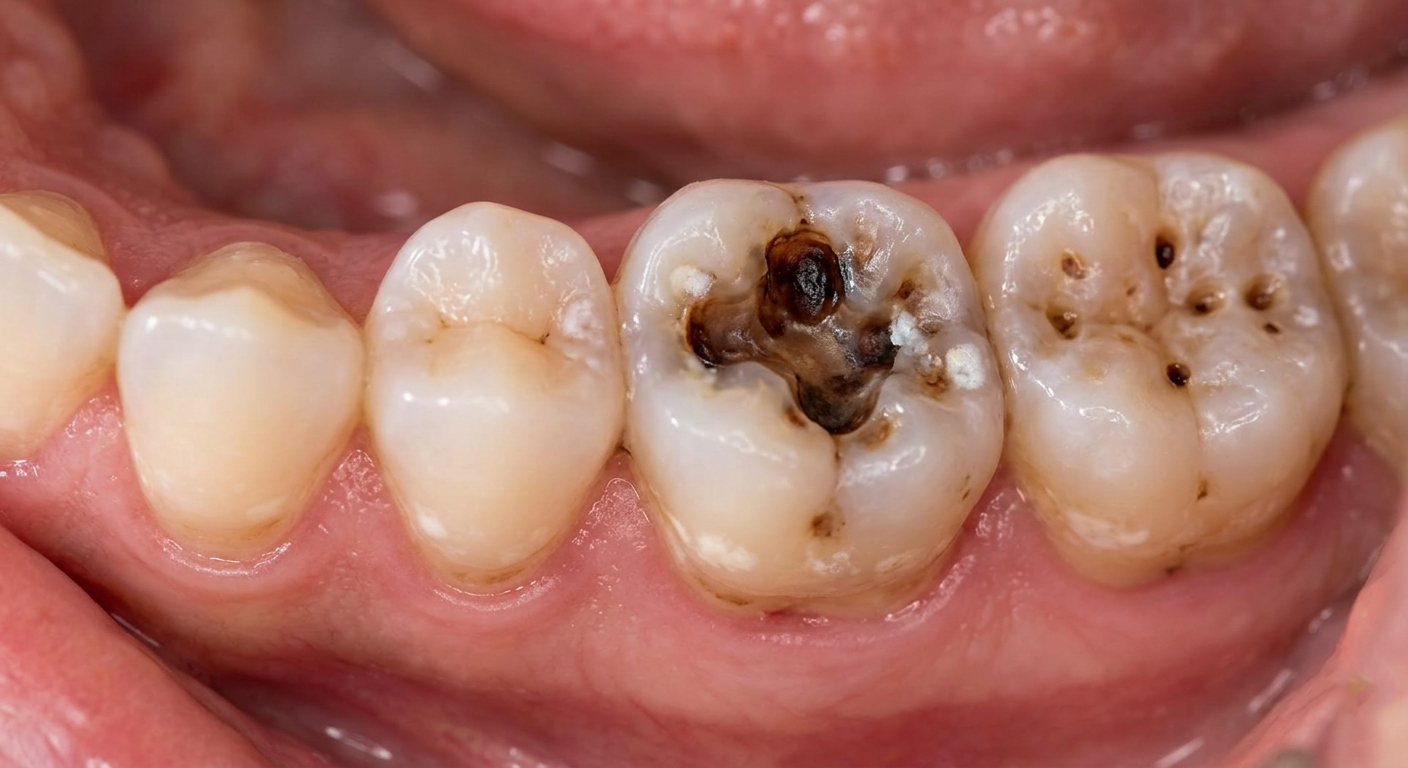
Introduction Dental caries, commonly known as tooth decay, is one of the most prevalent oral health conditions worldwide. It develops gradually when bacteria in dental plaque break down sugars in the mouth, producing acids that damage tooth enamel. If left untreated, it can lead to pain, infection, and tooth loss. What Is Dental Caries? Dental caries is a chronic disease that affects the hard tissues of the teeth. It occurs when plaque—a sticky layer of bacteria—accumulates on tooth surfaces and converts dietary sugars into acids. Over time, these acids dissolve the tooth enamel and create cavities. Free sugars include all sugars added to foods and drinks by manufacturers, cooks, or consumers, as well as naturally occurring sugars found in honey, syrups, and fruit juices. Causes of Tooth Decay Several factors contribute to the development of dental caries: These factors increase acid production in the mouth, which weakens and destroys tooth enamel. Symptoms of Dental Caries Early-stage tooth decay may not show visible signs. As it progresses, symptoms may include: Complications If not treated early, dental caries can lead to serious complications such as: Prevention of Tooth Decay Dental caries is largely preventable with proper care: Conclusion Dental caries is a preventable condition that can significantly impact oral health if ignored. Maintaining good oral hygiene, reducing sugar intake, and visiting a dentist regularly are key steps in protecting your teeth from decay.